Secure the machine and work area
Follow your company's safety process and the manufacturer's shutdown guidance. Lower attachments when appropriate, isolate the work area and prevent unauthorized operation. If there is a leak, damaged component, electrical concern or unstable machine, keep people clear until the condition is assessed.
Do not keep restarting a machine repeatedly just to see whether the problem goes away. Some faults can become more expensive when the equipment continues to run.
Capture the symptoms before they disappear
Write down what the operator saw, heard and felt. Was there a warning message? Did the machine lose power gradually or stop suddenly? Did the problem occur under load, while traveling or immediately after startup? Did temperature, smoke or hydraulic response change?
If the display shows a fault code, photograph it. If the problem is intermittent, a short video can help document sound or behavior that may not be present when a technician arrives.
Gather the machine identity
Record make, model, serial or PIN, current hours and any customer asset number. If the issue involves an engine, engine model and serial information can also be useful.
If the machine has recent repair history, note what was done and whether the current problem appeared before or after that work.
Decide whether mobile or shop service makes sense
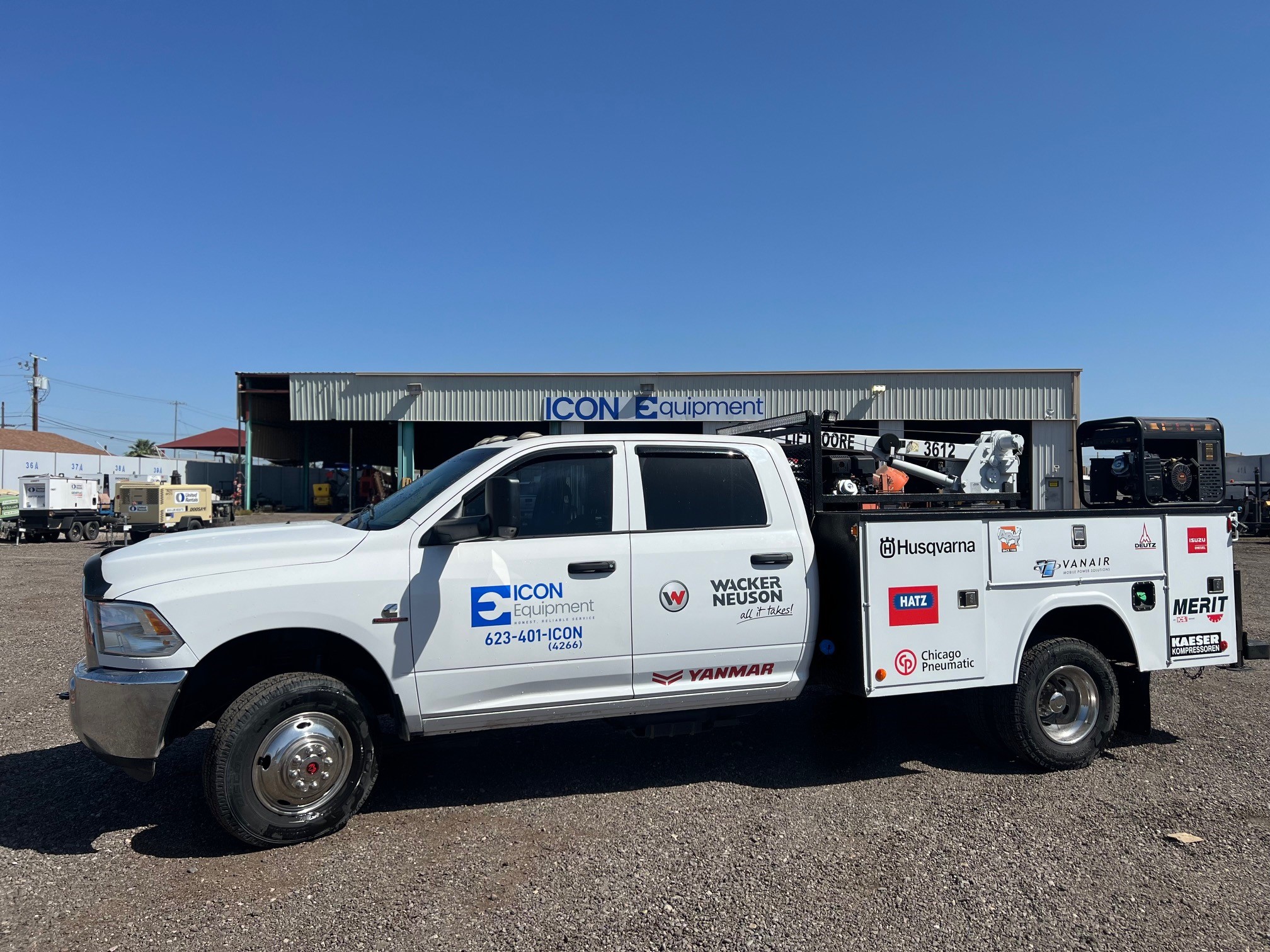
Field service can make sense when the machine cannot be moved economically, the jobsite has suitable access and the likely repair can be performed safely in the field. Shop service may be better for repairs that require specialized equipment, extensive disassembly or controlled conditions.
The service team can help make that decision once the machine, symptoms and jobsite details are known.
Keep the crew productive while the repair is evaluated
If the machine is critical to production, decide what work can be reassigned, whether another unit can cover the task and what deadline the equipment is supporting. Sharing that operational context helps the service conversation reflect the business impact, not only the mechanical symptom.